Jeanneau Sun Odyssey 45.2 Goes Transatlantic
Jeanneau Sun oddyssey 45.2: An ocean crossing as a shakedown cruise? No problem!
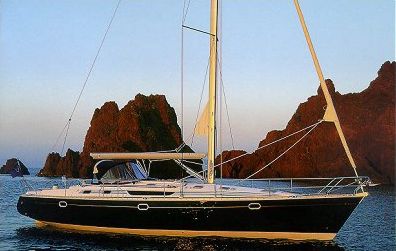 Jeanneau enjoys a long history in the Caribbean charter trade. Have you ever wondered who delivers these boats transatlantic and how well they perform in the open ocean?
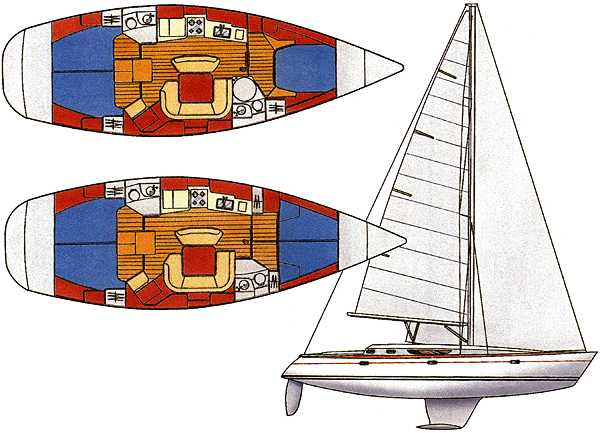 Owner Richard Kaylor purchased a Jeanneau Sun Odyssey 45.2 from Sun Yacht Charters at the Newport (R.I.) Boat Show. His hull was nearing completion at the Jeanneau factory in France, scheduled to be brought across to the West Indies on its own bottom. Rather than have a charter delivery company transport the boat, Richard decided to hire his own skipper (moi!), make a leg himself, and get some fellow adventurous sailors to help offset the delivery expenses. Plans for an early-season ocean passage materialized.
We arrived in France at the seaside sailing mecca Les Sables D'Olonne to pick up the boat early, which gave us time to visit the Jeanneau factory some 60 miles inland. Mr. Denis Quartier, director of commercial export, met us at the factory. After an introductory session that included food and a nice bottle of wine in the company cafeteria, we were able to watch the boat as it was lifted out of the pool behind the factory. It is in this hydroponic parking lot that Jeanneau runs a new vessel's engine and systems in a rigid quality- control program that has become pivotal to the builder's "Maytag" repair reputation. Boats do not leave the factory until they have had all systems checked.
With the boat swinging overhead not unlike a bridge span at a construction site, we observed her bulbed fin keel, drawing 6'7" on a wide 14'8" beam. Her deep-draft rudder, positioned all the way aft, looked a bit on the small side for the anticipated heavy- weather first leg of our impending trip, although it showed promise for a light touch on the helm under most conditions.
Anxious to get back to the coast and alert the commissioning company to the boat's arrival, we declined the rest of the factory tour. I did, however, accept graciously a gift bag offered upon leaving. I had to laugh at the parting gifts. One was a tie, so I now own two, and the other was a boxed set of three Jeanneau ashtrays. How European!
Back in Les Sables we had trouble getting the commissioning company to speed up the process. Despite our success getting the boat moved to the coast early, it was in fact delivered on a Friday. Given the region's 35-hour work week, we would be lucky to get away by our estimated departure date. A week later, however, we were able to provision and set foot aboard the boat at 1:00 p.m. on the day of our planned exodus.
It is a testament to the commissioning crew and to Jeanneau's craftsmanship and attention to detail that we would even consider departing on a 4,500-mile voyage within a few hours of taking possession of the boat. In my experience, having worked for some time at a boat dealership that included the Jeanneau line, these boats always stand out as easy ones to prepare for ocean service. The short repair list at the end of our 4,500-mile sail seconded the conviction that both the factory and the commissioning crew do great jobs.
Our first leg was to the island of Las Palmas, 1,350 miles through the Bay of Biscay and around Portugal. After a quick crew change we would complete the 2,800 miles to Tortola in the BVIs. We departed the last day of March, when we felt confident that the pattern of three-day gales with a day or two in between was still the norm.
Trip preparation
 This boat featured a four-cabin, two-head charter layout for work in the Virgin Islands. We carried six crew for each leg of the delivery. That represents a lot of baggage and supplies on a long trip. We were able to find room for all our gear, a full complement of food, and fourteen 25-liter diesel fuel drums. We were able to store five of the fuel drums in each of the cockpit's gull-wing-type lockers and four in the aft lazarette, which is tucked underfoot between dual 36-inch wheels.
There was plenty of room to store our provisioning in the cabinets, under thesettee in the main saloon, and in the large fridge and freezer. The boat was safety-equipped to meet rules and regulations for the charter trade. We brought our own GPS, life raft, and medical kit.
On deck
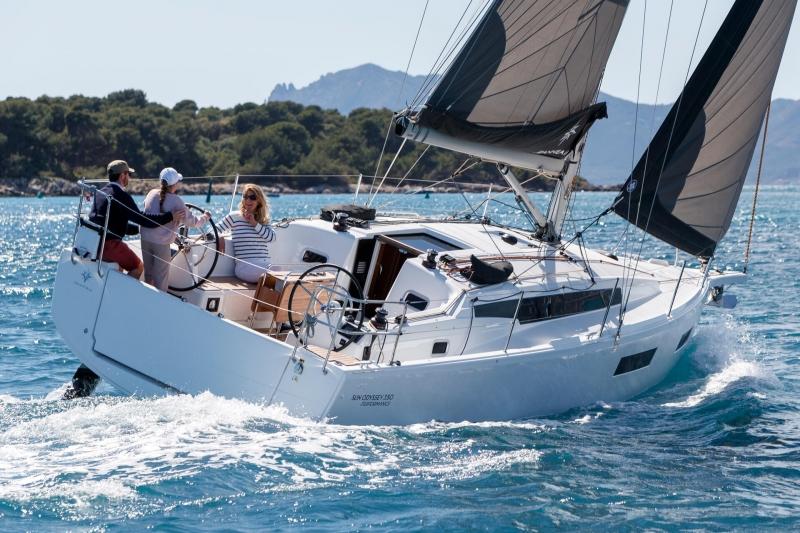
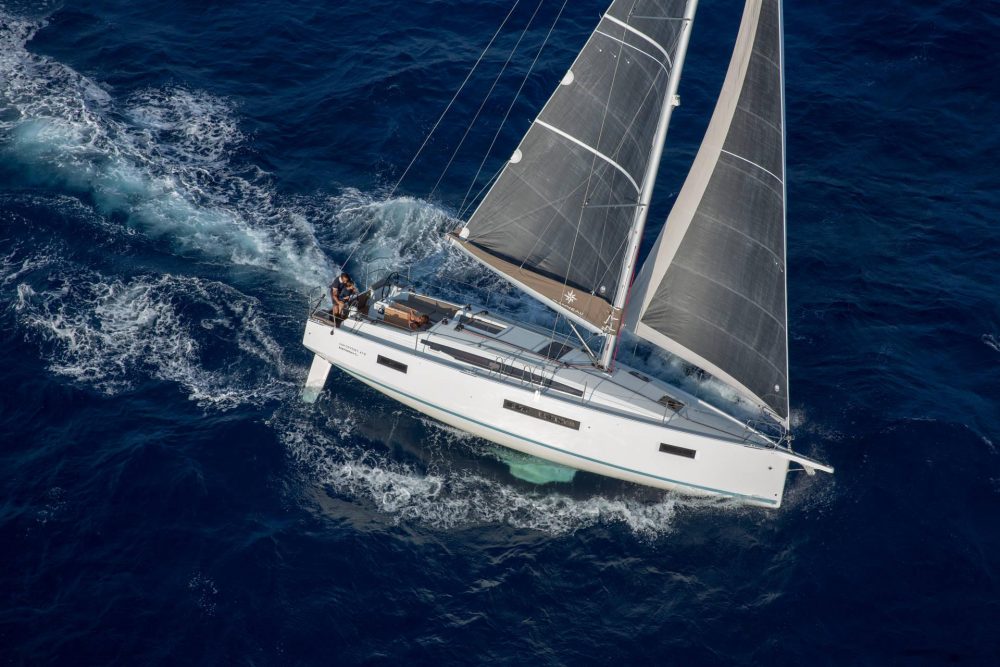
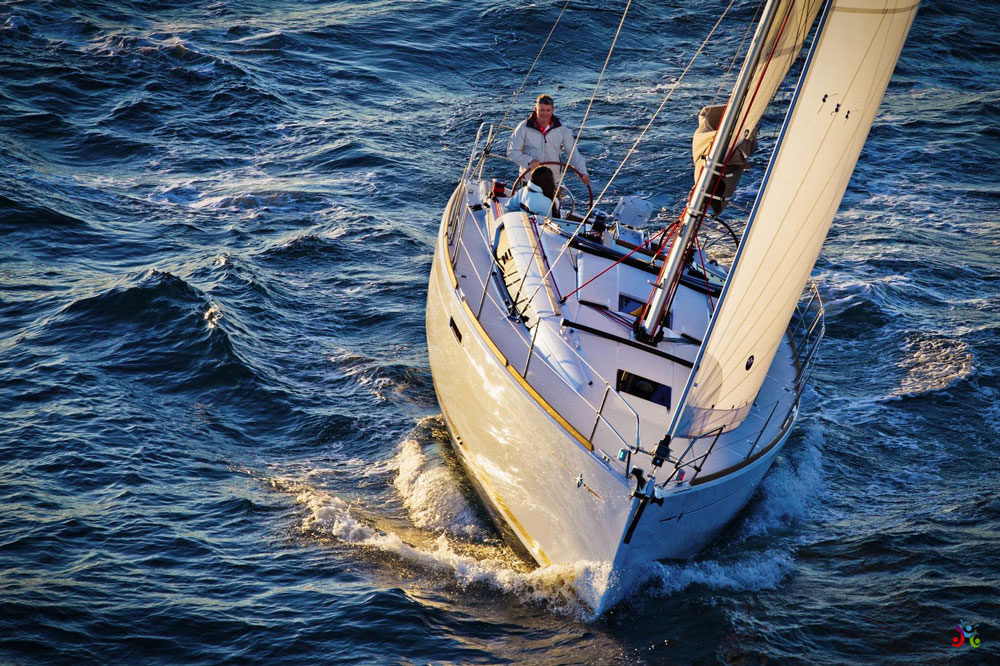
The deck is very uncluttered even though all lines run aft to the cockpit. There is a rigid vang, which adds to the clean look aloft. There are six big cleats fore, aft, and amidships for docking. There are no Dorades, tubular stainless guards or hard lines on deck to take away from the vessel's pleasant modern profile. The 45.2 is a pretty boat to look at, characterized by a gentle sheer and a graceful reverse transom with a swim step.
We departed an hour before sunset on the evening we moved aboard. Right off the bat we were impressed with the boat's dual wheels and commodious cockpit. How could I not like a wheel that made even my 5'8" frame feel tall? When steering, my hands in the traditional ten and two o'clock position, my arms were extended comfortably at pocket height.
We often spend from 50 percent to 70 percent of our time in the cockpit when the weather is nice or when the autopilot is not working. The Jeanneau 45.2 has, as noted, a very spacious cockpit where four to six people can hang out unencumbered. There are two helmsman's seats to choose from, and one crew can lie down to leeward while two or three others are seated to weather with their feet wedged against a very sturdy cockpit table. The table has two fold-up leaves that we found easy to set when needed for dining in the cockpit and just as easy to fold out of the way when done. There is a center compartment in the table that on charter may serve as an ice chest; at sea it is very handy for all the loose gear that accumulates in the cockpit. And most important, there are plenty of drink holders.
With two wheels you have an open passageway on-center aft to the swim platform through two swinging doors in the transom. This is great for swimming at anchor, especially considering the folding stepladder for easy boarding and a hot and cold shower at your fingertips to starboard. When Med-moored, it is a valuable asset, one often unheralded by an American public who are not used to stern-to docking.
The aft lazarrette between the two wheels is also the steering-gear compartment, with excellent access to the quadrant and cables amidship and the hotwater heater to port. This was where we stored our filled garbage bags. One complaint we had was that the plywood and hardware used to compartmentalize this space was not strong enough. But then this was also where we stored four 25-liter diesel drums all of which rolled around a little in the gales off Portugal, so perhaps we were being a bit demanding in our criticism.
The other great storage place was the forward sail locker behind the anchor well. Besides a spare sail or two, (something most charter boats never have or need because everything is on a roller furler) there is room here for fenders, a boat hook, and crew luggage. There is a ladder to help you descend to the bottom when invariably you find out that what you need has settled there. There is even access down below from inside the forward port cabin. This is also where the anchor windlass control lives, tucked out of the way to keep the bow clear. An open bow pulpit with a small seat, and a double anchor roller underneath, finish the pointy end of the boat.
Equipment underway
On the first leg of the trip we spent seven out of nine days in full foul weather gear as we battled through two gales with winds in the 20- to 35-mile-per-hour range for most of the time. It was nice to have both a roller-furling main and genoa — meaning that we did not have to leave the cockpit often — and we found that we were able to reef smaller and smaller with ease. The roller-furling sails are a nice feature for a charter boat, despite what many purists are apt to say about the performance compromises inherent in mainsail furling . We had a Sparcraft furling mast and a Profurl furling system forward, and both worked well under horrendous conditions.
The boat was well appointed with Harken gear throughout except for the traveler. For some reason a traveler by a company called "Amiout" (which also manufactured the deck fill fittings) was used. It did not operate or hold control lines well; I would have preferred a Harken traveler to complete the Harken package.
On European boats we tend to find bare wire used as lifelines. I imagine that this is done for easier inspection of lurking or potential problems. The Jeanneau is no exception. I prefer the coated-wire lifelines that we see on almost all American boats — much easier on hands and sails. After several years, if you are in doubt as to the integrity of a coated-wire lifeline or if you are heading off on a long trip, simply replace them. It's money and effort well spent.
Belowdecks
With a three-hour-on, six-hour-off, two-man watch system, of course we never had a bunk problem while we were at sea. The two aft cabins and the starboard settee were very good sea berths on port tack. There were plenty of hatches, 11 of which opened (not including the large sail locker forward and two open ports in the cockpit). Also, for the charter trade there were a total of six fans mounted throughout.
 But we did have our problems in rough weather. The hatches did not leak, but this does not mean that the cabin remained completely dry during our tortuous ride down Biscay from France, a ride that can only be described as the ultimate field test for a boat review. Both vents over the two forward cabins let water in as a result of design flaws, which led to wet bunks. There was nothing wrong with their installation; they were simply of a poor design that could not stand up to two or three days of 25 knots on the nose. We duct-taped them shut for the second leg. Another water ingress problem that would never be found in the test pond behind the factory involved the main hatch. There is a very small gap between the main companionway hatch in its shut position and the seat for the hatch. Not always, but when the timing was right, water would bounce off the back lip of the closed hatch and then, as the bow dropped into the next big wave, shoot forward and pour through the small gap described and spill down below. Until they can recreate the Perfect Storm in the back lot of the Jeanneau factory, we will only encounter these most insidious of flaws on the test track at sea (and to be honest, I believe that this was a flaw in our particular boat and not the result of a defect in the mold). During the second leg of the trip we did not experienced any problems with leaks on this scale below.
Most of the time, boats under 50 feet can do just fine with one head (until one plugs up at sea, when naturally you wish you had two). But charter boats need at least two and sometimes boast up to four. On this trip the aft head was designated men's and proved to be the better one, as it was nearer the center of the boat. Immediately to port of the companionway step, it did double duty as a wet locker during the two gales we rode out sailing south from Les Sables. The forward head was just aft of the two forward cabins and worked fine for maneuvers that involved sitting down.
When we left France I assumed that no self-respecting Frenchman would have commissioned the boat with the Y-valve set on holding tank. So I thought it odd on the second day out of Las Palmas to see (and smell) discharge from the holding tank vent hose (located, thank you very much, port side aft near the port helm station). I assumed logically that we had filled the holding tanks and only needed to find the overboard discharge and empty them. But nooooo...
I could not find any holding tank discharge system at all. There was no macerator, no hand pump, not even a Y-valve to be found. It was a mystery unsolved until the end of the trip, when we turned the boat over to SunYacht and one of their maintenance people come up to me and queried, "Is this one of the boats I got an e-mail about in which they neglected to run the waste discharge system?" Truth be told, it was, the only noteworthy glich in an otherwise impeccably prepared sailboat.
Opposite the aft head on the starboard side is one of the best nav stations I have ever seen on a boat this size. I like a chart table at which you can sit on either tack . The Jeanneau 45.2 has a great seat and a chart table angled 30 degrees off center that gives it a tucked-in feeling. The tabletop is large enough for a Chart Kit or easily folded government chart. There is a lot of space for the installation of electronics. This boat was minimally charter equipped with only knotmeter,depth, speedo and a VHF.
The two aft cabins are large enough to lie down in. They work on either tack. Each has a hanging locker, shelves, and a nightstand-type space on top of the engine box. Part of the great engine access aboard this boat is through the top and side panels that open up from inside these cabins. The steps also pull away in front of the engine. The engine is a 62-hp Yanmar that was more than big enough for any of our needs.
Charter boats need a bulletproof battery system for some of the not-so-bulletproof charter guests that commandeer them. Jeanneau uses the proven three-bank battery system with an isolated starting battery. We noticed only one tie-down per battery and felt that this detail could have been a bit more developed for going offshore, although the battery box lockers themselves also had their own positive latches. Two large batteries were plentiful for our house needs. We ran the engine almost everyday for an average of one to two hours predominantly to power the engine-driven refrigeration system.
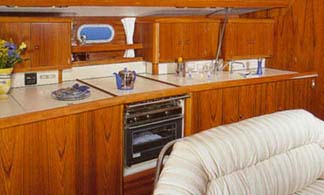
Which leads us finally to the galley. We might have started here since the galley is in the middle of the boat. I call it the Euro-galley, which runs along the port side of the boat, opposite a large saloon table. A center island settee rounds out the seating area, fit for anywhere from six to ten people. Although not ideally practical out at sea, this type of galley with its long counter space, four-burner stove and double sink is a match for any chef when the anchor is down.
We applaud the safety bar in front of the stove, but the 90-degree corners leave sharp points in the way of any crewmember turned projectile at sea. It would be better to have a curved or radiused bar with no corners. The other good handhold in the main saloon (handholds, by the way, were less than abundant) was on the back of the center settee. This had to be tightened every third day with a Phillips-head screwdriver — not altogether surprising, as it is a focal point of the saloon and by needs takes a lot of abuse offshore in any kind of seaway.
Feeding six people for four weeks requires a lot of food. The storage in the galley area and main saloon were up to the task. A large freezer and separate refrigerator compartment held all the perishables. The engine-driven reefer system worked like a champ until the belt on the engine pulley slipped off. This is common enough on any new boat out in the ocean for the first time. Thrashing about in heavy seas tends to shift things out of alignment on maiden voyages, so tightening belts (or putting them back on after you have neglected to tighten them) is only to be expected.
We had plenty of freshwater capacity on both legs, with two tanks stockpiling a total of 158 gallons. A galley saltwater foot pump for washing up helped to conserve potable water, and in the warm climates outdoor saltwater showers always work just fine.
Blue Water conclusions
Years ago when Jeanneau first came to the States, I happened to work for one of the first of three dealers on the east coast. The grunts in the front line who commission new boats can tell you how well a boat is built. If it is difficult to put it all together, then the boat wasn't built right. If it is difficult to service the systems or run wires, then it wasn't designed well. One thing that always impressed us then, and was reaffirmed in France in this case, is the notion that a Jeanneau goes together well. Most boatbuilders would cringe at the thought of throwing a boat review at one of their boats on a 4,500-mile transatlantic passage in the early spring only hours after factory commissioning. I can think of few boats that would have stood up to the test as well as this 45.2 did. Building a boat for both the offshore market and the charter trade is a tough nut to crack. They represent two of the harshest environments, yet they are completely different in their impact on the vessel. On the one hand, the charter trade invokes the gorilla in the Samsonite commercial. On the other, anyone who has spent three days in a near gale with "this sucks" written in the last two days' worth of log entries knows how trying it can get offshore. Jeanneau has done a great job offering layouts and a package overall in the 45.2 that work admirably for either task.
Hank Schmitt runs Offshore Passage Opportunities (www.sailopo.com, phone: 1-800-472-7724), a delivery service and crew placement outfit based in Halesite, NY.
Jeanneau Sun Odyssey 45.2 Specifications
| LOA | 46'5" | 14.15 m. |
| Hull length | 45'3" | 13.8 m. |
| LWL | 38'5" | 11.71 m. |
| Beam | 14'8" | 4.48 m. |
| Draft deep bulb-fin | 6'7" | 2.0 m. |
| Draft optional shoal bulb | 5'3" | 1.69 m. |
| Ballast deep | 7110 lbs. | 3224 kgs. |
| Ballast shoal | 8102 lbs. | 3675 kgs. |
| Displacement deep | 20,570 lbs. | 9300 kgs. |
| Displacement shoal | 21,208 lbs. | 9640 kgs. |
| SA 100% | 823 sq.ft. | 76.44 sq.m. |
| Ballast/Disp deep | .35 | |
| Disp/Length deep | 162 | |
| SA/Disp deep | 17.5 | |
| Fuel | 54 gal. | 205 ltr. |
| Water | 105/158 gal. | 400/600 ltr. |
| Auxiliary | Yanmar diesel 62-hp | |
| Designer | Jeanneau Design |
Jeanneau Newco
BP 529
85505 Les Herbiers Cedex
France
Ph: 02 51 64 20 20
Fax: 02 51 67 37 65
In the U.S.:
Jeanneau America
105 Eastern Avenue,Suite 202
Annapolis, MD 21403
Ph: 410-280-9400
Fax: 410-280-9401
Find a Jeanneau Dealer near you