The Big Picture: Big Power that Lives
Two new developments have made big-power engines a whole lot more reliable.
November 12, 2009
Back in the day, high-horsepower marine engines were fragile. Now they’re solid—sort of.
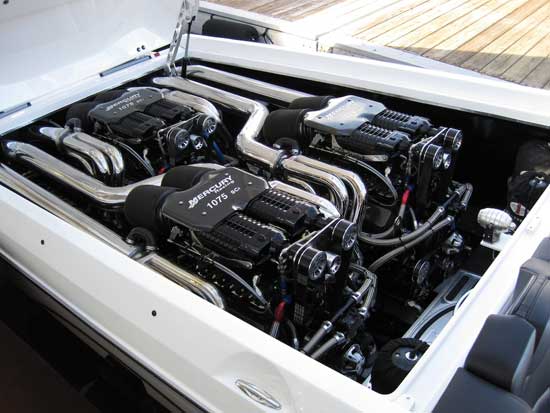
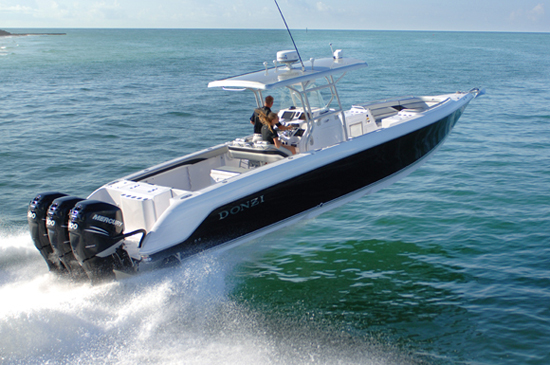
A pair of Mercury Racing's 1075s, a modern example of reliable big power.
Any way you look at it, the Mercedes Benz S65 AMG is one spectacular vehicle. From performance to styling, it’s simply breathtaking. I’d gladly trade my Honda Ridgeline for it. Plus, the S65 has been billed as the “world’s most powerful series-production car,” thanks to its bi-turbo V-12 engine pumping out 612 hp.
Which by performance-boat standards, would be pretty wimpy, even downright feeble. At least these days.
As the editor at large for Powerboat magazine, I come by this information honestly. At the end of the magazine’s 2009 Performance Trials, we sat down and ran some numbers. Here’s one that stood out:
The average boat we tested had 600 hp—per side. That’s right, most of the boats we tested had twin engines, meaning an average combined output of 1,200 hp.
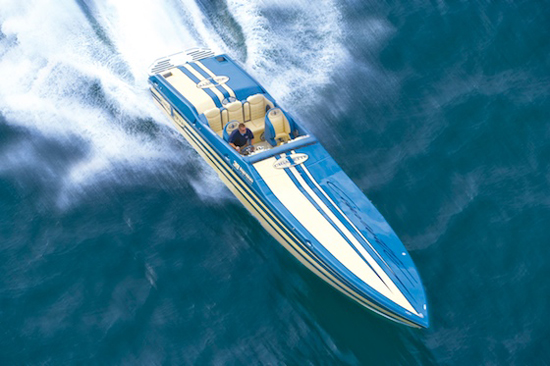
Anyway you look at it, that’s a lot of power. It was good enough for well above 100 mph in the catamarans and 90-plus mph in most of the V-bottoms we evaluated.
And yet even for a go-fast boat, that kind of power is fairly mellow. The biggest player in the high-performance marine-game, Mercury Racing offers 1,075- and 1,200-hp engines. Noted custom builders Chief, Sterling Performance and Teague Custom Marine offer engines up to 1,400 hp.
That builders can create such powerful engine is nothing new. What’s relatively new, at least in my 15 years of covering the go-fast boat world, is that these engines can actually live for more than a few hours. Back in the day, big-horsepower engines were big trouble. They were temperamental, which is a polite way of saying they broke down constantly.
Even those big-power engines that boasted decent “reliability” often lacked drivability. That’s a polite way of saying they often stalled when shifted or at idle speeds, which made docking an adventure. On more than one occasion, I can remember running down the docks to stop one stalled and “coasting” go-fast from smashing into another that was already moored.
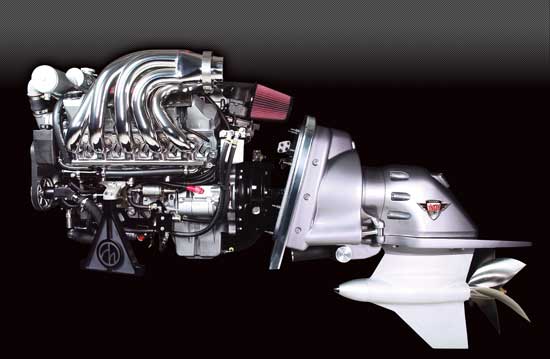
Now you get behind the wheel of a boat powered by Mercury Racing’s 1075SCi engines and their behavior around the docks is downright civil. Sure, they have gobs of gobs of power throughout their operating range—as they should for an engine that costs in the $300,000 (not a typo, friends) range with a No. 6 dry-sump drive—but it’s the way they behave when they need to, well, behave, that makes them so impressive. And the same can be said for the big-power offerings of the best custom engine builders.
So what’s the deal? What changed? A bunch of things, actually, but two stand out: electronic fuel injection and computer control. Those two developments, combined with better engine design and construction, as well as stronger and more-advanced parts, have enabled engine builders to create reliable engines in the 1,000-plus-hp range.
Trust me, when I first started with Powerboat in 1994 only a sucker or the guy who swindled him would use the words “reliable” and “1,000-plus-hp” in the same sentence. Of course, this relatively new breed of power does require substantial routine maintenance. Some even require top-end rebuilds in the 50- to 75-hour range. To skip such service intervals is to tempt fate and, frankly, is just plain dumb.
With 612 hp, the Mercedes-Benz S65 AMG tops out at an electronically limited 155 mph. With more than four times that amount of power, today’s fastest piston-powered catamarans are reportedly getting well into the high 180-, low 190-mph range. Water isn’t easy to move through, much less make speed through.
But it’s a whole lot easier when your horsepower stays alive.