Sumerset 21' x 106'
Contact Seller
XPresented For Sale By:
Next Level Powersports
United States
| Make | Sumerset |
|---|---|
| Model | 21' x 106' |
| Year | 2007 |
| Condition | Used |
| Price | US$950,000 |
| Type | Power |
| Class | House Boat |
| Length | 30 ft |
| Fuel Type | Gas |
| Hull Material | Aluminum |
| Location | Mountain Home, Arkansas |
| LOA | 100 ft |
|---|---|
| Beam | 20 ft |
| Dry Weight | 60000 lb |
| Engine Make | TWIN MERCRUISER |
|---|---|
| Fuel Type | Gas |
| Power | 520 hp |
| Engine Location | Port |
| Engine usage (hours) | 287 |
| Additional Equipment |
|
|---|---|
| Electronics |
|
| Inside Equipment |
|
| Outside Equipment/Extras |
|
| Guest Cabins | 3 |
|---|---|
| Crew Cabins | 1 |
| Guest Heads | 2 |
| Crew Heads | 1 |
| Seating Capacity | 20 |
| Fuel Tanks | 400 gal |
| Hull Shape | Displacement |
Description
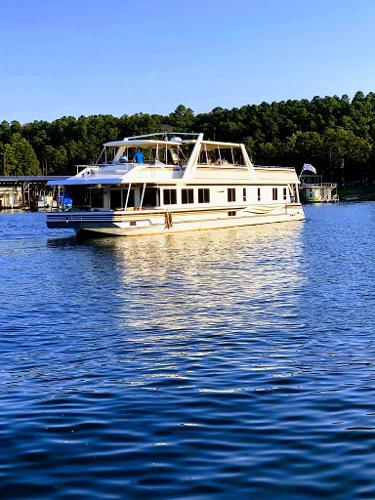
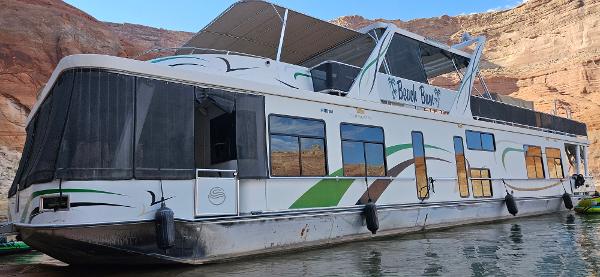
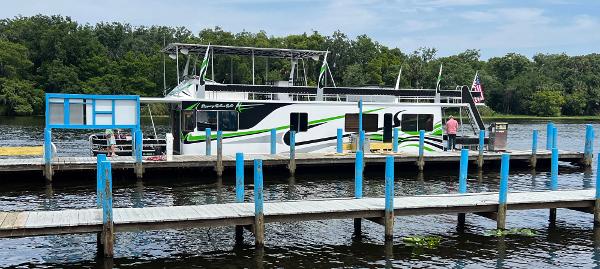
Overall profile: Long, low-slung houseboat profile with broad bow and full-width aft deck; three main deck levels typically: lower hull/pontoons, main living deck, upper flybridge/sky deck. Walkways run the full length on each side with sizable bow and stern platforms.
Foredeck & bow: Wide bow lounging area with built-in seating, removable sun pads, stainless anchor roller and windlass (electric) often recessed into a forward chain locker. High bulwarks and stainless rails for safety.
Main aft deck: Full-width aft entertaining area with hardtop or bimini option, integrated seating/bench lockers, exterior grill station or wet bar, storage lockers, and easy transom access to swim/boarding ladder.
Upper decks / flybridge: Large helm station with full instrumentation and seating for guests, shaded lounge, non-skid decking, radar arch and mounting points for sat/comm antennas. Often includes second BBQ, storage and optional bar.
Walkways: 21′ beam yields wide side decks (approx. 2′–3′) with secure handrails and gates at bow/stern.
Exterior finishes: Marine-grade gelcoat or painted aluminum/steel surfaces, stainless steel trim, tempered safety glass on large forward windows. Teak or synthetic decking in high-traffic areas is common on nicer builds.
Hardware: Heavy-duty deck cleats, stainless rails, through-bolted fittings. Fender hangers and dedicated storage.
Hull & Structure
Construction type: Sumerset houseboats commonly use welded aluminum or steel hulls with boxed crossmembers and pontoon-style flotation chambers (or welded perimeter hull) — build varies by model. The cabin/deckhouse typically built from marine-grade plywood with fiberglass or composite exterior skin; many Sumerset boats also used aluminum superstructures for weight savings.
Structural highlights: Reinforced keel and cross-members, full-length stringers, multiple watertight bulkheads in the pontoon area for reserve buoyancy.
Bottom & protection: Abrasion-resistant paint or sacrificial zincs on metal hulls; some owners add rock guard or sacrificial rub rails.
Stability: Wide 21′ beam yields strong initial stability — comfortable at anchor and during onboard activities.
Mechanical & Propulsion
Typical powerplants: Many 100+ ft houseboats are fitted with twin outboards or inboard diesels. For a Sumerset 21×106 configured for reliable cruising, options include twin sterndrive V-8 Mercruiser/Mercury (Bravo) drivetrains, or twin diesel inboards — confirm exact engines on the vessel.
Example / commonly found package: Twin Mercury Bravo drives (V-8), matched propellers, hydraulic steering, and substantial trim/tilt systems. (If your boat has Mercury 5.0 Bravo units and a 20 kW generator, include those exact specs in the listing.)
Generator: Onboard 20 kW diesel generator (quiet, marine-rated) powering AC systems and house loads — sized appropriately to run HVAC, galley appliances, and electronics without shore power.
Fuel systems: Large integrated fuel tanks sized for extended runs; fuel fills port and starboard with cross-connect valves.
Engine room / access: Dedicated engine compartment with full-height access hatches, sound insulation, drip pans, and remote shutoffs; fire suppression system commonly installed.
Steering & thrusters: Hydraulic steering and often bow thruster(s) or stern thruster for close-quarters maneuvering on large houseboats.
Exhaust & ventilation: Waterlift mufflers or wet-exhaust systems to quiet engine noise; dedicated engine room blowers and intake ventilation.
Electrical & Electronics
12V DC & 120/240V AC systems: Dual-bank 12V battery system (starter and house banks), battery chargers/isolators, inverter/charger to supply AC when generator is off (size depends on owner spec).
Shore power: Heavy-duty 50A/120/240V shore power inlets, with smart shore power management and galvanic isolation.
Generator: Onboard 20 kW generator with soundshield; automatic transfer switch optional.
Electronics at helm: Multifunction displays (GPS/chartplotter), VHF radio, radar, depth/speed, autopilot (if equipped). Second station likely on flybridge.
Lighting: LED navigation lights, courtesy deck lighting, distributed interior LED fixtures, accent rope lighting on decks.
Entertainment: Integrated stereo with zone control, cabin TV(s), satellite TV/antenna provisions, networked entertainment wiring and possibly wired-in Wi-Fi boosters.
Interior Layout & Accommodations
(Configurations vary due to semi-custom nature — this is a detailed typical layout for a 106′ Sumerset.)
Main salon (midship): Huge open living room with panoramic windows (often full-height forward and side windows), L-shaped leather or fabric sofas, coffee table, built-in cabinetry, recessed lighting, and overhead skylights in some layouts. Flooring options: high-grade carpet in lounge areas, hardwood or vinyl plank in high-traffic zones.
Formal dining: Dedicated dining area seating 6–10—often adjacent to the galley, with fixed or extendable table and storage credenza.
Galley: Full galley with residential height counters, solid-surface countertops (Corian or equivalent), 4-burner stove, convection microwave/oven, large refrigerator/freezer (12V/AC combo or residential), double stainless sink, plenty of storage, and pantry space. Ample counterspace for meal prep and serving.
Master stateroom (forward or mid): King or queen berth, walk-around layout, his & her closets, ensuite head with full shower (or tub/shower), vanity, and high-end finishes (wood cabinetry, solid counters). Large windows for daylight.
Guest staterooms: 2–3 additional staterooms — combinations of twin or double berths, with dedicated storage and reading lights. Each typically has its own head or shares a well-appointed guest head.
Crew/utility cabin: On larger houseboats, a crew/utility cabin with bunk(s) and separate head is often located forward or near the engine room.
Heads (bathrooms): Multiple heads with porcelain marine toilets (vacuum or macerator systems), molded fiberglass or tiled showers, vanity cabinets and ventilation fans.
Laundry: Dedicated laundry closet with stacked washer/dryer (ventless or vented) — common in long-term living layouts.
Interior finishes: Combination of high-quality woods (teak, cherry, oak), satin or gloss varnish, brushed stainless hardware, leather or high-end upholstery, and custom window treatments. Trim details include crown molding, coamings, and recessed accent lighting.
Storage: Ample under-berth and under-seat storage, dedicated linen closets, rod & reel storage if fishing package, and lockable safe in master suite.
Systems — Plumbing, HVAC & Safety
Fresh water: Large fresh water tanks (often 200–800+ gallons for big houseboats) with high-capacity water pump, pressure regulator and in-line filtration for drinking water.
Hot water: Onboard marine water heater (AC or diesel-fired) with shore/generator heat options.
Sanitation: Holding tanks with electric macerator discharge systems and overboard discharge as applicable by local laws; black water tank level sensors and pump-out connection on deck.
HVAC: Multiple split-system heat pumps or central marine HVAC units powering zones (salon, staterooms, flybridge A/C). Large units sized for full-time liveaboard comfort.
Bilge & pumps: Multiple automatic bilge pumps (high-capacity) with alarm system and manual backup pump. Redundant bilge float switches and centralized monitoring.
Fire suppression & safety: Fixed CO2 or FM-200 engine room suppression (depending on engine type), handheld extinguishers in cabins and galley, smoke and CO detectors, life jackets, and throwable flotation. Fire extinguishers and placards up to code are recommended.
Navigation & safety gear: Life ring, flares, horn, emergency tiller, first aid kit, and emergency bilge pumps.
Performance & Handling
Cruising characteristics: With a 21′ beam and long waterline, cruising at moderate speeds is comfortable and fuel-efficient; ideal for lake cruising and protected waters. Not intended for heavy offshore seas.
Top speed & economy: Heavily dependent on propulsion; large houseboats optimized for displacement/power balance — expect comfortable cruise speeds in the mid teens (knots) for typical inboard/diesel setups; sterndrive/outboard packages may be quicker but use more fuel.
Maneuvering: Bow thruster and twin drives greatly simplify docking; wide beam reduces roll while at anchor; large turning radius compared with smaller vessels.
Typical Weights, Capacities & Estimated Specs
Length overall (LOA): 106′
Beam: 21′
Draft: Typically 2′–4′ depending on hull/ponton configuration (estimate)
Fuel capacity: 300–1500+ gallons (highly variable; verify tank size)
Fresh water: 200–800 gallons (typical for liveaboard)
Black water holding: 100–400 gallons (depends on tanks & plumbing)
Generator: Example: 20 kW marine generator (user earlier noted a 20 kW)
Engines: Twin Mercury Bravo sterndrives or diesel inboards — verify exact model & hours.
Electrical: 120/240 VAC shore power (50A or 100A), inverter/charger capacity varies by installation.
Maintenance, Condition & Inspection Notes (what buyers ask for)
Structural inspection: Check for hull corrosion, weld integrity, pontoon compartment integrity, and signs of water intrusion at deck joints & windows.
Engine room: Look for oil leaks, coolant discoloration, clean oil samples, running hours on engines and generator; inspect exhaust manifolds and waterlift mufflers.
Electrical: Verify shore power wiring, shore/generator transfer switch operation, battery condition, and functionality of inverter/charger.
Plumbing: Confirm fresh/black water tank integrity, pump operation, and marine toilet operation (check for odors).
HVAC: Test all zones for cooling and heating under load (generator or shore).
Cosmetic: Upholstery, cabinetry, window seals, and exterior gelcoat/paint condition; any soft spots in decking.
Documentation: Title, builder’s plate, maintenance logs, parts manuals, and any recent survey or haul-out reports.
Disclaimer
The Company offers the details of this vessel in good faith but cannot guarantee or warrant the accuracy of this information nor warrant the condition of the vessel. A buyer should instruct his agents, or his surveyors, to investigate such details as the buyer desires validated. This vessel is offered subject to prior sale, price change, or withdrawal without notice.
Presented For Sale By:
Next Level Powersports
United States
Presented For Sale By:
Next Level Powersports
United States