The History of the 37 1/2 foot Cigarette, Blue Thunder & 41 foot Apache: Jerry Jacoby’s Journey
Dive deep into the history of offshore powerboat racing.
Jerry Jacoby, a trailblazer in offshore racing, sat down with VÉHICULE to recount the fascinating history behind the creation of the 37 1/2 foot Cigarette "Top Gun" and the 41 foot Apache. From his early days as Rookie of the Year to his innovative collaborations with Don Aronow, Jacoby’s story reveals the ingenuity and determination that shaped two of the most iconic boats in racing history. Below is his unfiltered account of those pivotal moments
"Winning Rookie of the Year in 1978, I was invited to compete at the World Championships in Mar Del Plata, Argentina. That year I competed with a 35 foot Cigarette, which I had bought from Rocky Aoki, naming it the Ajachawk. Knowing the rough sea conditions usually found in Mar Del Plata, I went to Don Aronow to see if he could build me a larger race boat. Time restraints were the issue, Don though suggesting that he build a 39 foot Cigarette, which he could have finished in time for the Championships.

I had raced against Billy Martin that season, who ran a 39 foot Cigarette, Bounty Hunter, and had noticed the boat had a tendency to 'porpoise' in flat & semi flat sea conditions, with flaps up & drives out all the way for max speed. Dropping the tabs a little and bringing in the drives in a little, relieved this, but it did have an effect on top speed. And the deck on the 39 was a 'bubble deck.' Aesthetically, not very appealing.
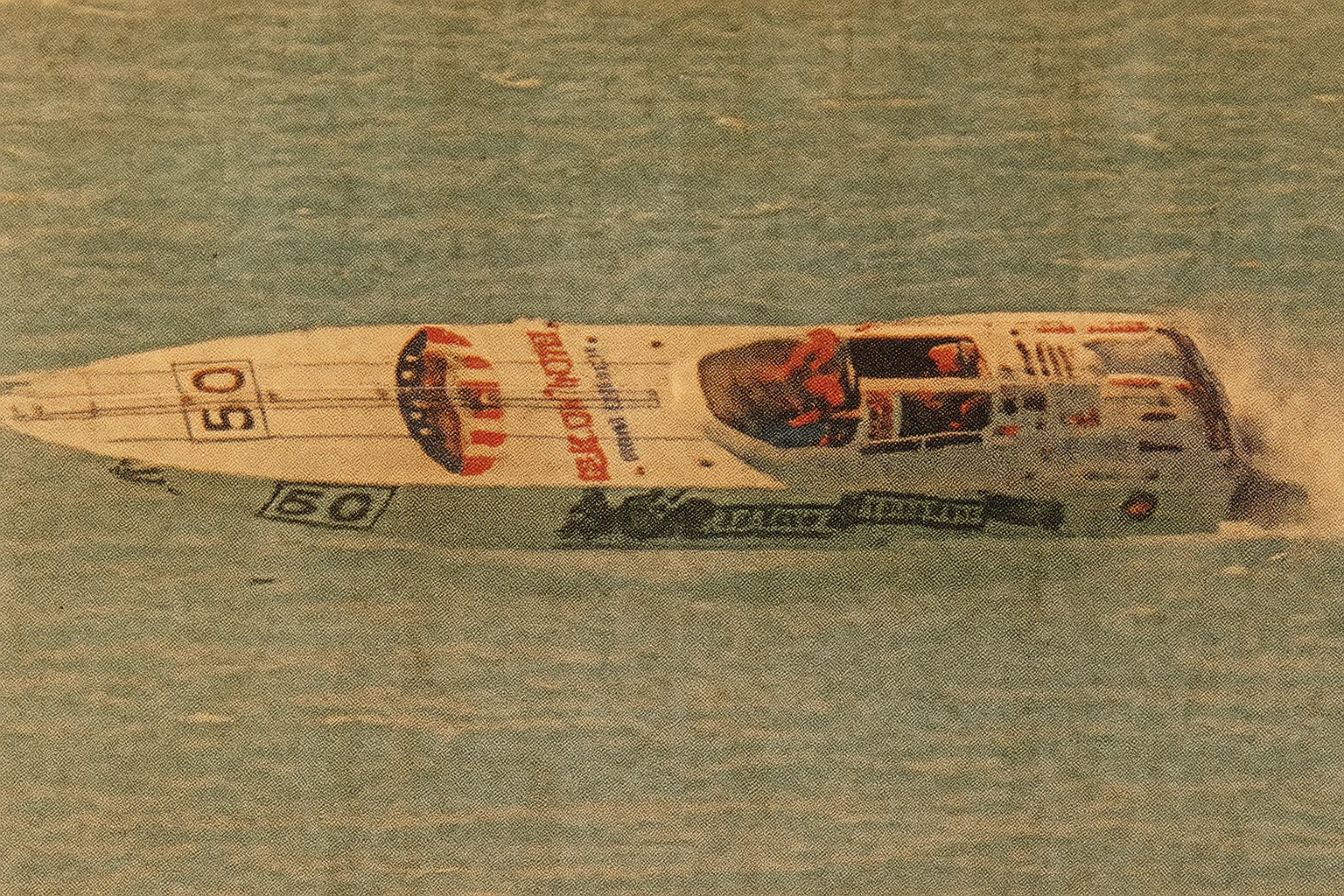
At the Cigarette factory Don had a new 39 hull that would have been ready to build into a race boat. I questioned Don about this, so we took a straight edge & placed on the bottom at the stern going forward and did notice the hull had an extreme upward rocker the last foot & a half, which explained the 39's tendency to 'porpoise.' With that I suggested Don block off the 39 foot mold at 37 1/2 feet, change the transom angle 4 degrees. Also then take the flat ribbed deck from the 36 foot Cigarette, with a 9 foot beam, and cut it down to accommodate the 8 feet beam for the new 37 1/2 Cigarette. Don built it, the rigging was done by Inservice Marine, and I had a boat for the World Championship in Argentina.

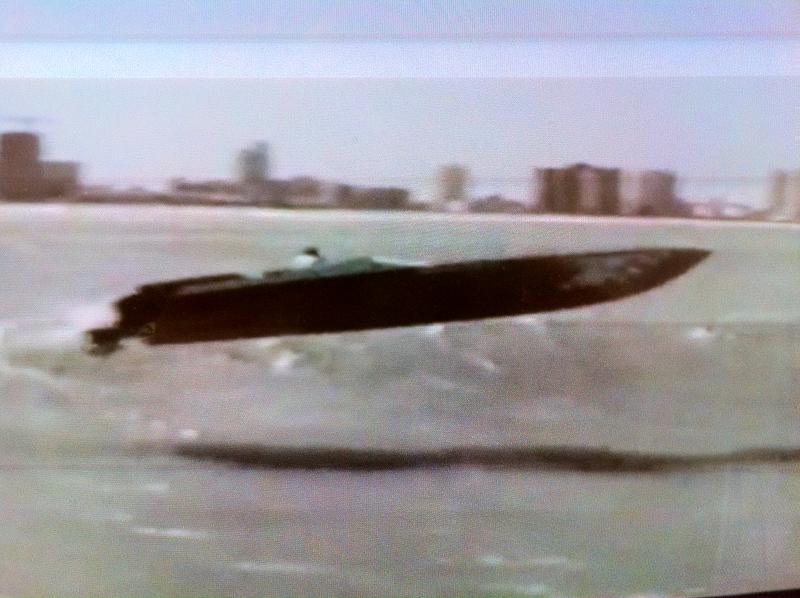
At the race the new Ajachawk, with a pair of Mercury engines, outperformed all expectations in the very rough sea conditions that day. The first 40 miles we had the lead by a considerable distance, but one of the Mercury engines blew up and that was the end of my day. It did though convince me, after also having had several other Mercury engine failures during that first season, to then start my own engine company. I went to visit Kiekhaefer Aero Marine, in Wisconsin, making an offer to purchase the company, but it was not for sale. I then offered the top 2 engine builders and stern drive builder to relocate to Miami & work in my new company, Hawk Marine. They did relocate.


Moving ahead to 1981 I purchased the Cigarette boat company from Don. Months later I had a new 41 foot race boat hull & deck molds built, by stretching the 37 1/2. It was for a new race boat I was planning to build. Unfortunately, I moved on from the Cigarette Boat company, but still had the deck & hull for the 41, stored on Thunderboat Alley, 188th Street.
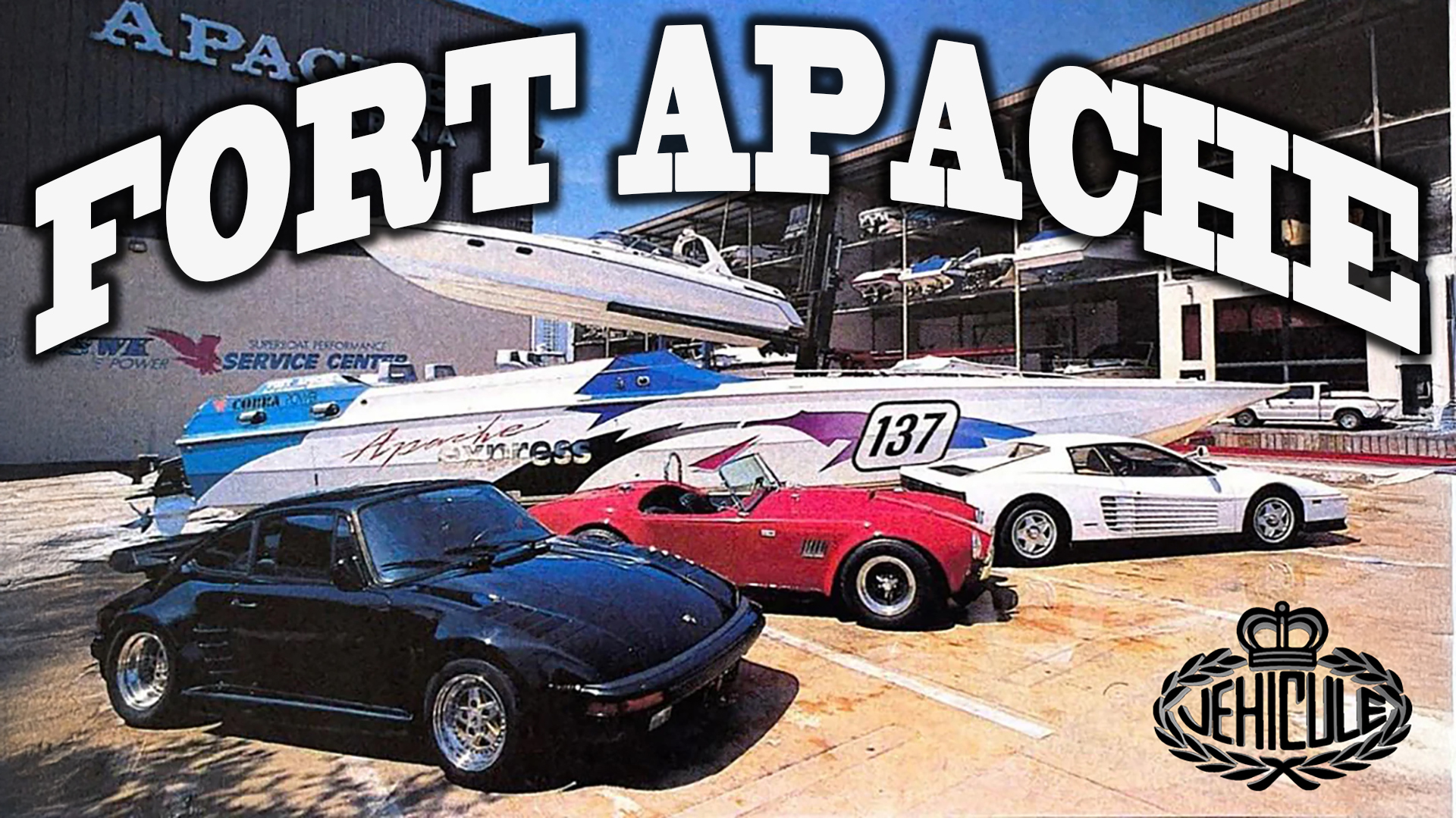
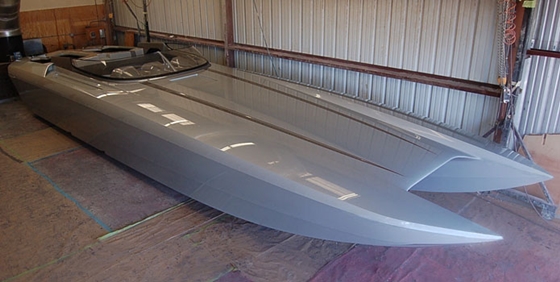
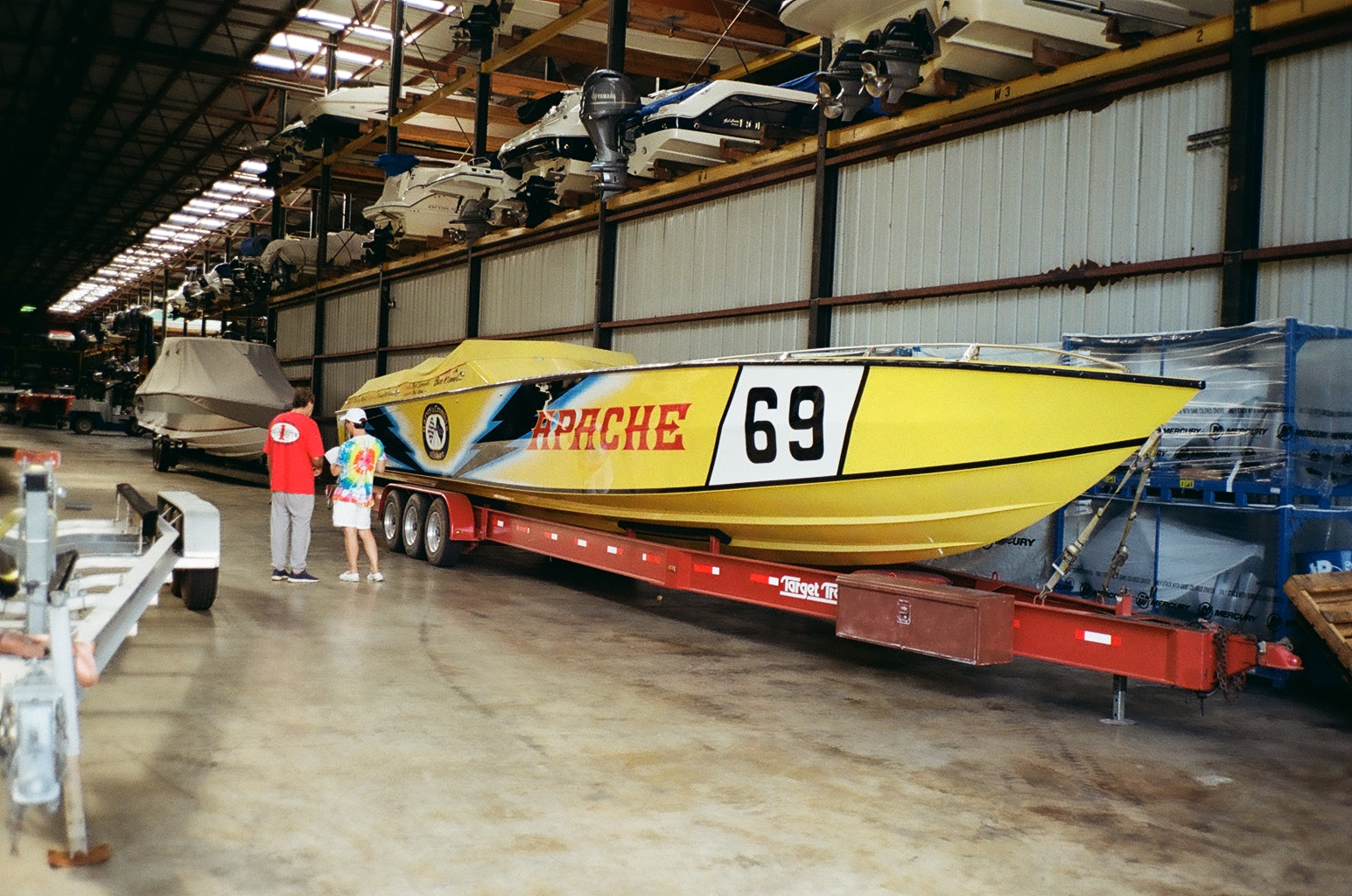
In early 1984 Don came to me, asking to buy (I gave them to him, no charge, Don being such a close friend back in those days), the hull & deck mold, telling me he had a contract & planned to build a catamaran for US Customs. He would use the hull design to build 2 'V' bottom sponsons for his new Blue Thunder Catamaran. Later that year Don sold the 41 foot mold to Bob Saccenti & Ben Kramer, which then became the 41 foot Apache.
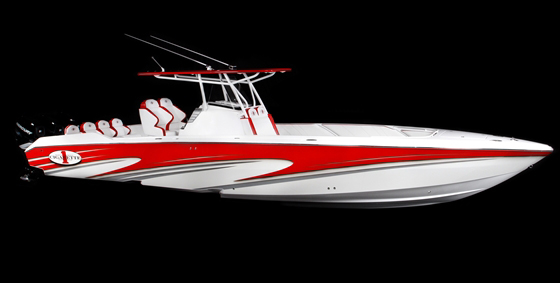
The rest is history, and as for the 37 1/2 Cigarette, it became known as the 'Top Gun,' being one of the best selling Cigarette models of all time, in the pleasure boat form. Several other racers bought into the 37 1/2, racing them also. In 1981 I won the World Championships with the 37 1/2, it being exceptional in rough seas. The 41 foot Apaches, went on to be extremely well on the race circuit for many years.“
Read more about the golden years of offshore powerboat racing in VÉHICULE.