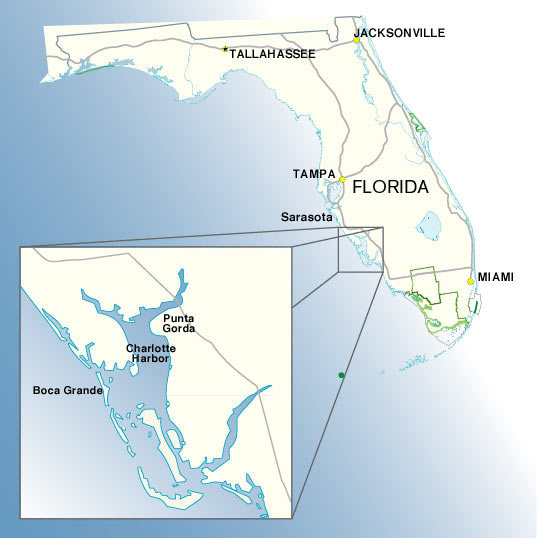
Charlotte Harbor Riches
Southwest Florida's Charlotte Harbor has great year-round angling action
September 30, 2001

Healthy stocks of snook are available in Charlotte Harbor.
Few spots rival Charlotte Harbor for consistently good inshore fishing.
The fish variety and angling opportunities are remarkable. And the action is predictably good year-round in almost any kind of weather.
Tarpon are found throughout Charlotte Harbor and surrounding regions, especially the famed Boca Grande Pass. From April through July, thousands of tarpon bless Boca Grande with some of the world's best fishing for the species.
By late summer, tarpon scatter throughout the area, with Pine Island Sound, nearby Chino Island and the keys east of Captiva Pass especially good. Grass flats, bridge pilings and sandbar drop-offs are prime places to look for summer tarpon, especially at night, dawn and dusk.
During fall and winter, schools of small tarpon to 50 pounds are found in tight, confined reaches of the Peace and Myakka rivers that feed upper Charlotte Harbor. In warm winter weather, tarpon take artificials and live baits. But when it's cold, fish are lethargic and about the only thing they'll hit is cut bait soaked deep.
Snook
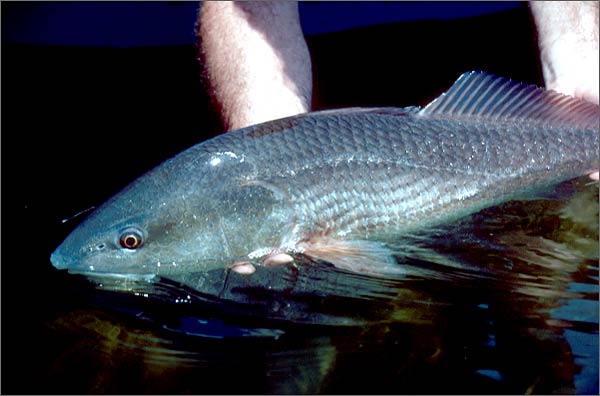
Redfish are fairly abundant in Charlotte Harbor year-round, but fishing can be sensational during October and November.
Excellent snook fishing also is available October through April in the Peace and Myakka rivers. During winter, heavy snook in the 8- to 20-pound range retreat up the rivers, at times far into fresh water.
Jigs and sinking plugs are effective when cast tight to mangrove banks or across sandy points near islands during low, running tides. Snook anglers unfamiliar with the rivers can do well by trolling small baitfish (including freshwater shiners), shrimp, jigs and bottom-bumping lures along river channel drop-offs.
During warm winter trends, snook become active and move down-river toward more open reaches of Charlotte Harbor. Under such conditions they can be taken on surface lures and darter-type plugs, with low-light conditions best for fishing.
Night angling with noisy top-water plugs is productive for snook spring through summer around Charlotte Harbor sandbars, submerged oyster reefs, mangrove points and cuts, bridge and causeway pilings. High,
running tides at dawn and dusk are excellent for snook, and anglers can
expect an occasional tarpon and redfish.
Seatrout
Red hot seatrout action is available year-round in Charlotte Harbor and
nearby Pine Island Sound. Heavy roe-laden females begin to show in March, and 5-pound-class fish are caught by anglers working live baits and grub jigs in and around Gulf passes and channels.
By late May the biggest trout are scarce, but outstanding late spring fishing for 1- to 3-pounders is available around grass flats in big bays and in deep sloughs adjacent to islands and channels.
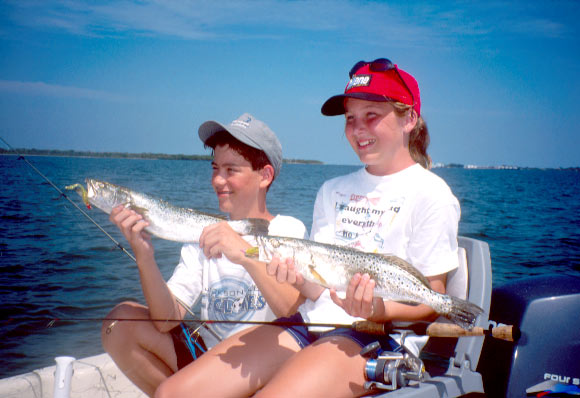
Good-sized seatrout are yet another of Charlotte Harbor's riches.
Summer trout fishing is good, too, but heavy afternoon thunderstorms flush much fresh water into Charlotte Harbor and drive bait shrimp and seatrout closer to the saltier Gulf. Early morning,late afternoon and night fishing over shallow grass flats produces trout best.
By October and November, trout again are scattered throughout the bay over grass flats. They stack over grass in water 3- to 6-feet deep, even in winter when the weather is warm. During cold snaps huge numbers of seatrout school in deep channels, holes, dredged canals and cuts, and around deep-water bridge spans. The mouths of the Peace and Myakka rivers are especially good.
Cobia
April and May are the height of the cobia season in Charlotte Harbor, and fish to nearly 70 pounds are caught. Spring fishing is especially good for cobia around channel markers and sand bars, where big ones to 90 pounds have been recorded.
Cobia migrate far up the Peace and Myakka rivers, where they're caught regularly through summer, until they leave the rivers and harbor in fall.
The Smorgasbord
Tripletail, flounder, sharks, Spanish mackerel and bluefish are other
sportfish regularly caught by Charlotte Harbor inshore anglers. Spring
through summer is choice for tripletail weighing 8 to 15 pounds and they're caught around channel markers and crab-trap floats, often with cobia.
Flounder favor sand bottom areas, especially in the back-country. January through March, flat fish to 4 pounds are caught with regularity on grub jigs.
Sharks in the 40- to 200-pound class show in May, and are in good supply until November. They're great sport on light plug and spin gear.
Bulls, blacktips, lemons, duskies and spinners are available, and at times there are schools of five to 10 fish. Light-tackle anglers lose a lot of sharks, but the unnerving strike of a 100-pounder crunching a surface plug is worth the loss of a lure.
Spanish mackerel and bluefish are regularly caught by fishermen from May through summer in the lower, more open areas of Charlotte Harbor. Jigs and spoons score well when worked near channel edges and deep sand bars. Other sportfish such as sheepshead, black drum, small grouper and mangrove snapper are in good supply in much of the harbor. And in recent years pompano have started to show again in force.
Like inshore fishing almost everywhere, wind and tide phase are vitally
important for successful Charlotte Harbor fishing. Tides in the harbor are extremely variable. Summer tides are higher than winter tides, and wind is an important factor.
Strong north winds "push" tides out of the harbor, which can make for difficult back-country fishing that's best during high water.
Yet even when conditions are tough, you can bet on catching at least some fish from Charlotte Harbor, simply because it's so big, and full of fish that you're bound to put a lure or bait in front of something that'll hit.