The 24 Hours of Rouen: France's Premier Powerboat Race on the River Seine
The 24 Heures Motonautiques de Rouen, a legendary endurance powerboat race on the Seine, ran annually until 2019.
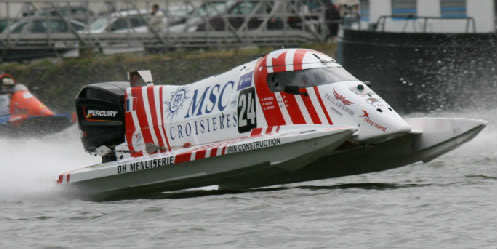
The 24 Hours of Rouen, a renowned powerboat race on the River Seine, enthralled motorsport fans for over five decades. Held in Rouen, France, this endurance event was a global phenomenon. In this article, we explore its origins, challenges, notable moments, and lasting legacy, offering facts that captivate boating and racing enthusiasts.

24 Heures motonautiques de Rouen, Image by VÉHICULE
Origins of a Motorsport Legend
Launched in 1964, the 24 Hours of Rouen took place around Île Lacroix, 90 miles from Paris. It swiftly became a motorsport icon, rivaling Le Mans for its endurance format. Over 400,000 spectators gathered annually, drawn to the high speed action on the Seine. As a result, Rouen emerged as a powerboat racing hub, attracting elite teams from the United States, Italy, and beyond.

24 Heures motonautiques de Rouen, Image by VÉHICULE
The Seine's Formidable Challenges
Racing on the Seine was exceptionally demanding. Tidal currents created unpredictable waves, while large barges generated wakes that could destabilize boats. Choppy waters between stone wharfs strained hulls, and floating debris threatened propellers. At night, drivers relied on basic boat lights, heightening collision risks. Consequently, the 4,700 meter course required precision and seamless teamwork.

24 Heures motonautiques de Rouen, Image by VÉHICULE
Evolution of Boats and Technology
Early races featured V shaped hulls, but by the late 1960s, catamarans with twin hulls and wind tunnels dominated for enhanced speed and stability. Engine technology advanced rapidly, with outboard motors like Mercury Racing's 2.5 litre OptiMax two strokes leading the charge. In 1993, a French American team set a record, covering 3,182 kilometers at 132.5 kilometers per hour with Kevlar catamarans and 300 horsepower outboards. Furthermore, innovations like reinforced cockpits and GPS trackers improved safety and performance.

24 Heures motonautiques de Rouen, Image by VÉHICULE
Defining Moments in Race History
The 24 Hours of Rouen delivered unforgettable moments. In 1964, Bouillant and Delettrez won the inaugural race, covering 1,468 kilometers at 61 kilometers per hour. By 1967, outboard engines secured their first victory. In 1972, Italy's Baggioli, Riva, and Redaelli claimed the first foreign win, challenging French dominance. In 1979, Italian legend Renato Molinari, a 14 time world champion, triumphed in a Fiat Abarth powered catamaran, a pinnacle of powerboat engineering. In 2001, Mercury powered SPM 76 Pegase Racing completed 753 laps, or 1,684 miles, outdistancing rivals like Omega Competition with 706 laps.
A tragic 2010 collision between a raceboat and a safety boat, resulting in one death and one injury, reshaped the event. The race shifted to a two day, 12 hour format in 2011, then three eight hour days in 2012.

24 Heures motonautiques de Rouen, Image by VÉHICULE
Fascinating Facts for Fans
- Top Speeds: Boats reached over 130 kilometers per hour, navigating the Seine despite barge wakes and debris.
- Night Navigation: Drivers faced near zero visibility at night, relying on minimal lighting to dodge obstacles.
- Record Endurance: The 1993 record of 3,182 kilometers in 24 hours remains a benchmark of engineering and skill.
- Massive Crowds: Over 400,000 fans lined Rouen's banks yearly, creating a festive atmosphere with food stalls and live music during May Day.
The Race's End in 2019
The 24 Hours of Rouen concluded after its 56th edition in 2019. Environmental concerns, rising costs, and the 2010 tragedy proved insurmountable. Organizers experimented with shorter formats, but the event could not be sustained. Consequently, Rouen lost a defining motorsport tradition, leaving fans reminiscing about the Seine's roaring engines.

24 Heures motonautiques de Rouen, Image by VÉHICULE