Family Powerboating Safety Essentials
Protect your loved ones on the water.
April 16, 2006
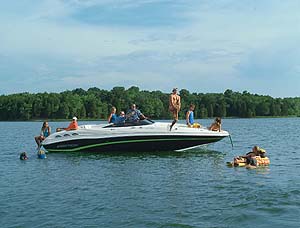
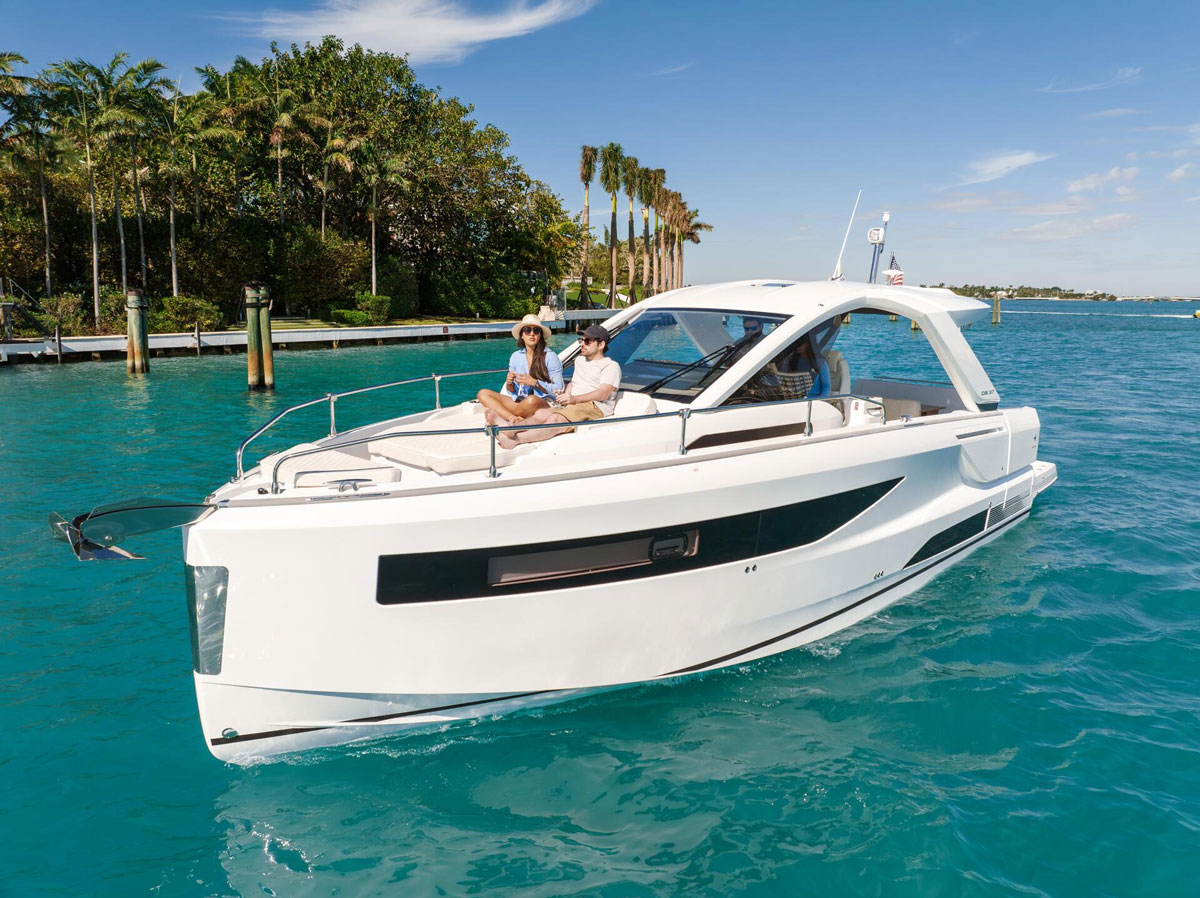
Unnecessary accidents and injuries can be avoided by following simple rules and regulations. (Photo courtesy/copyright Ebbtide Boats.)
Every boater anxiously awaits the start of a new boating season. Nothing compares to the thrill of open air, water sports and fun with family and friends. To guarantee that everyone has fun, you must take the proper precautions. Proper boating safety is often overlooked.
Unnecessary accidents and injuries can be avoided by following simple rules and regulations. A boat is a vehicle, so safe operation is a captain's obligation to everyone involved.
Planning Ahead
Make sure there are enough life jackets that are easily accessible for every person onboard. The U.S. Coast Guard states that 86 percent of all drowning victims were not wearing life jackets. If children are onboard, most states require that children under the age of 13 wear Coast Guard approved life jackets when the boat is underway, except when the children are below decks or in an enclosed cabin. By enforcing life jacket rules, lives can be saved.
Always make sure everyone onboard has a seat and is near a handhold or handrail in case of rough waters. Never invite more people than you can accommodate. It's also important to always inspect your boat and equipment before leaving the ramp or dock. Double check to see that everything is working, to avoid any problems later in the day!
Many passengers and guests aboard are not always as savvy as one would assume. Nature's elements play a big part in a successful boating trip, and the captain must always be prepared. Pack extra towels and sunscreen for daytime activities. Extra blankets and jackets are important when the temperature dips at nightfall. In addition, for potential mishaps such as cuts, stings, or other minor injuries, make sure you have a complete first aid kit onboard!
Finally, it's easy to become dehydrated in the sun, so it is important to drink plenty of fluids while on the water. Pack a variety of cool drinks and snacks, along with ice for everyone on board. Make sure everyone is always comfortable.
Don't Drink and Drive
Alcohol consumption is a definite no-go if you are the captain. Not only do you put yourself and your passengers in danger, but other boaters as well. Boat operators become impaired quicker than a driver on land. In addition, alcohol is involved in about a third of all recreational boating fatalities. As captain, it is your duty to maintain sobriety.
If your passengers are consuming alcohol, you must monitor their consumption as well. If they've been drinking and want to swim, ski or tube, it is best to discourage them. Having no alcohol while aboard is the safest way to enjoy a day on the water!
Kids Will Be Kids
Try to get your average child to take a bath, and it seems you'll never get them wet. But go boating and it seems like you'll never get them dry! Riding in the boat, water skiing, tubing, fishing or just plain swimming: water, boats and kids are the perfect combination. However, proper safety precautions must always be made to ensure complete safety for the little ones!
As stated above, every child under the age of 13 must wear a life jacket when the boat is in motion. Little ones should never sit alone in the bow when the boat is moving. The captain must instruct all children to stay inside the boat when it is moving, and not to dangle feet or hands over the side. It's important to make sure children hold handholds or handrails at all times while the boat is underway. In addition, when the boat is anchored, kids should not swim unless a competent adult who can swim is supervising them.
As children grow, the inevitable question always arises? can I drive? Well, that depends. There are thirty states in the U.S. that require boaters of a certain age to take a boating safety course before they are allowed to operate vessels or personal watercrafts. Although there are states that don't require people to take boating safety courses, you should check your own state laws to be sure you're in compliance with age limits and hours of activity.
Even if the young driver is educated on boating safety, you'll still want to have capable adults aboard serving as navigators and enforcing a safe speed. For individual state regulations, visit this Web site:
http://www.boatsafe.com/nauticalknowhow/stateregs.html
Watersports
If water sports are going to be incorporated into your day on the water, inspect equipment and tow ropes before going out. When someone is skiing, wakeboarding, or tubing, always make sure that a lookout is watching the person the entire time. Know and use proper hand signals.
Never participate in skiing, wakeboarding, or tubing at night or in restricted areas. If approaching a fallen skier, cut the motor off prior to getting too close.
Now Have Fun
The rules, while plentiful, are easy to remember and live by while boating. By following basic safety precautions and using common courtesy, your summer outings on the water will be even more enjoyable. For all federal requirements and safety tips, please visit the Office of Boating Safety at www.uscgboating.org
Editor's note: Tommy Trabue has owned Ebbtide Boats for more than 40 years. Trabue serves on numerous boards, including his position with the National Marine Manufacturing Association.
For more information on Ebbtide Boats, call 615/797-3193, fax 615-797-4889, email [email protected], or visit the web site at http://www.ebbtideboats.com