A Sense of Balance
A Balanced Helm Will Make the Windvane and Autohelm Work Better
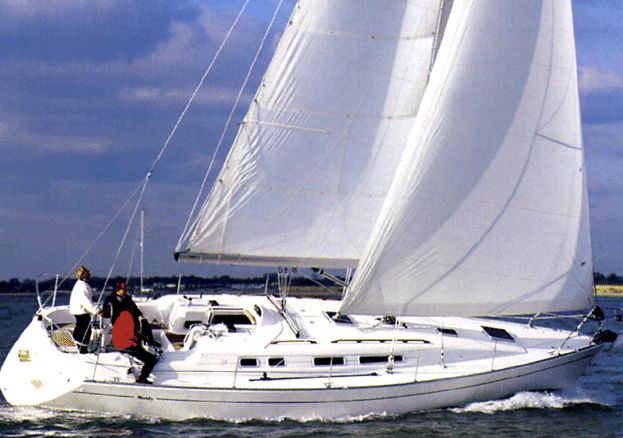 Over the thousands of miles we've sailed offshore, we've relied on our windvane and autopilot to do all of the steering. Along the way we've had the same successes and problems with our steering gear as most offshore sailors. The windvane works reliably in apparent winds over 5 knots but it tends to wander, adding as much as 10 percent to our rhumb line course on a long passage. The autopilot steers as straight as an arrow, but it eats up more electricity than we like to feed it; and because we haven't fitted an electronic vane sensor, the pilot can become an battery glutton when the wind shifts a little and throws the helm out of balance.
In our efforts to overcome these two flaws in our self steering we've had to become better sailors, for we soon discovered that the wandering of the windvane or the over eating by the autopilot almost vanished when we had Clover's helm balanced correctly. To do that we had to polish up on the basics of sailing physics and spend more time trimming sails. The results have been worth the effort.
Some Basics
On a cruising boat, gear that lasts a long time and works effectively is gear that hasn't been forced to work outside it's limits. For autopilots and vanes, that means the gear that works best is the gear that works the least. To reduce the strain on the gear means we have to reduce the amount of weather or lee helm caused by hull configuration and sail trim. But that does not necessarily mean trimming the sails until the helm is neutral or "dead."
Racing sailors generally seek to trim sails to the point that will give the helm roughly 3 to 5 degrees of weather helm, an angle that ensures that the rudder is providing maximum lift and minimum drag. It also provides the helmsman with a "feel" to the helm. A neutral helm, which theoretically would create the least drag, feels dead in your hand and is difficult to steer. A lee helm, in which the helmsman must continually head the boat back up to the wind, is little better than a dead helm, for it means the boat is trying to fall off the wind and therefore away from a windward destination. On a cruising boat using a vane or an autopilot, it is best to trim fort a slight weather helm; the boat will sail at its fastest and the steering gear will have the least and most efficient corrections to make.
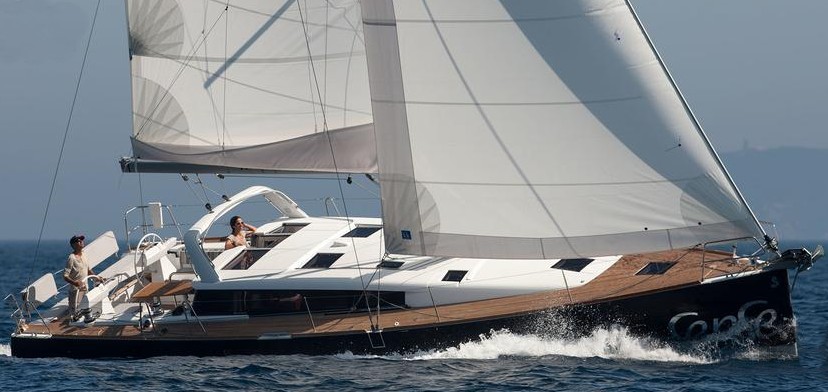
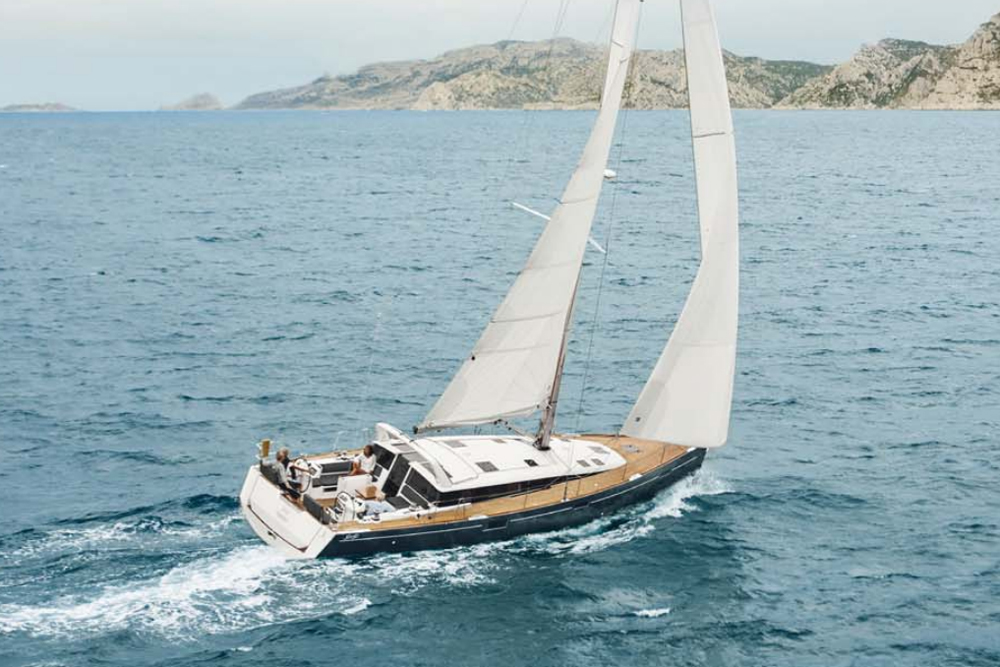
When a boat is designed, the designer strives to build balance into it by arranging the driving force in the sails, called the center of effort (COE), just slightly aft of the boat's center of lateral resistance (CLR) in the keel while the boat is underway. If you think of the CLR as the pivot point of a Windex , the large tail catches the most wind and pivots the point into the wind just like a ketch or yawl with only the mizzen set. The COE in this case is well aft of the CLR giving the Windex the equivalent of maximum weather helm. If you remove half of the tail of the Windex , you decrease the "sail area" aft and effectively move the COE forward. This is the same effect as reefing the mainsail on a sloop or dropping the mizzen on a ketch or yawl and will reduce weather helm dramatically. If you remove the tail altogether, the point will catch the wind and spin the Windex tail-to-the-wind, which an exaggerated simulation of a boat sailing with only a headsail; the boat's COE will be well forward of the CLR, good for downwind sailing, bad for going to windward.
As the wind changes direction and force, you have to keep in mind the relationship between your boat's CLR and the COE as you adjust trim and change sail configurations. When trimming the sails, begin with the headsail, then move aft to the main and mizzen; as always, let the sails out until they luff and then bring them in again until they are completely filled. As you change sail configuration, reefing or dousing sails, unhook the vane or pilot for a moment to feel the wheel. When you have the right configuration and trim, you'll have a balanced helm.
All boats gain weather helm when they heel and the beamier the design, the more weather helm it will develop. With experience, you will find the right angle of heel for your boat. Over the years we have found time and again that reefing early keeps the boat upright, keeps the helm balanced, the course straight and the average speed high.
Sailing Up Wind
There are a few simple techniques we have learned along the way to keep the boat in trim as the wind rises while we're sailing up wind. Our goal is to keep the boat moving well, to keep the helm balanced and to avoid being stopped by short head seas.
The first step as the wind increases is to flatten the sails, open the slot and de-power the main. To flatten sails, tighten halyards, outhauls and downhauls such as a Cunningham on the main; if you have an hydraulic backstay, tighten it. Open the slot between the headsail and main by moving the sheet car aft and to leeward if possible. To remove weather helm induced by increased heeling, de-power the main by moving the traveler slightly to leeward and ease out the sheet if necessary.
When it is time to reef, keep in mind the relative positions of your COE and CLR. On many boats you will find it best to reduce the size of the headsail first hopefully by rolling in a few feet to a pre-marked reefing point. The sheet car will have to be moved forward to maintain equal foot and leech tension and a spot on the track should be marked to correspond to the first reef. The boat will probably develop some weather helm because the COE has moved aft slightly. De-power the main more by easing the sheet until the sail luffs and ease the traveler to leeward. Fully battened mains will hold their shape longer than conventional mains, so trim to the telltales at the ends of the batten pockets rather than the luff. If weather helm persists, reef the main. With slab reefing, you'll reduce sail area by 30 percent, so the COE will slide forward, possibly creating lee helm. To overcome this, power up the main again by moving the traveler slightly to windward and trimming until the sail is full. On a ketch or a yawl, we probably would have doused the mizzen at this point, leaving it rigged for resetting should the wind increase.
As the wind increases even more, let's say the high-20s, the process followed above is repeated. Another reef should be rolled into the headsail and the car moved forward, the main should be de-powered until it begins to luff and finally a second reef taken in the main. In a yawl or ketch, this is the point at which it makes sense to consider dropping the main and raising the full mizzen; you may find that by doing so, particularly on a ketch with a large mizzen, that the COE will shift too far aft and a bit of headsail will have to be rolled out to maintain balance.
If the wind continues to increase, the sea will become nasty. To maintain progress you will have to go to a third level of reefing and must keep in mind that the reefed sails must have enough shape to power the boat through the waves. You may have to head off 10 degrees to avoid bow-on collisions with head seas and to ease the motion for the crew. (Also, at this point, Rosie and I start scanning the chart for alternate destinations....)
Shifting Winds
When the wind begins to shift, you'll have to adjust your trim to keep the boat sailing on course and at its best. It's usually a gradual process, requiring many small adjustments rather than one or two large ones. We'll look at the instance when the wind shifts from the beam to an angle off the quarter the kind of shift we always like.
As the wind moves aft, the COE will move aft with it increasing weather helm. The natural thing to do is to ease off the sheets until the headsail and main luff and then trim them in again until they are full and drawing well, thereby moving the COE well forward. We trim to the telltales, the feel of the helm and speed of the boat. But to gain the best sail shape as you ease the genoa, move the sheet car aft, opening the slot and giving the sail a fuller belly. On the main, ease off on the downhaul or Cunningham to give the sail a fuller shape and ease the traveler to leeward to remove twist in the top of the sail.
We have found broad reaching with quartering seas the toughest conditions in which to balance the boat. The waves tend to shunt the stern sideways laying us over a bit which instantly gives the boat a dose of weather helm causing the vane or autopilot to exert itself to stay on course. To overcome this, we reef or drop the mizzen and ease the main well out. On a sloop, the key is to make certain the genoa is out as far as it can go and the sheet car is moved well aft. The main should be trimmed to the edge of luffing and de-powered by setting the traveler to leeward.
If you are broad reaching and the wind begins to shift forward, you will have to go through the steps in reverse order, keeping in mind always that as you come harder on the wind the COE will shift aft, causing weather helm.
Sailing Down Wind
There are several good ways to rig standard working sails for running downwind with a vane or autopilot at the helm. Most cruising sloops and ketches run with the main all the way out to leeward and the headsail poled out to windward wing and wing (Figure 5). If you have a staysail rigged, it is useful to hoist it and trim it amidships, where it will stabilize the boat and keep it on a secure down-wind track. We find we can sail wing-and-wing through an arc of about 40 degrees, from dead down wind to an apparent angle of 140 degrees off the bow. The COE is so far forward up to that point that the helm remains balanced and the steering gear can control the boat without much effort. Another simple down wind rig, a variation on twin running sails, is shown in Figure 6. With two headsails set in this fashion a boat will slide downwind for days without putting strain on steering gear or the crew.
As the wind increases it is important to keep the COE as far forward as possible to avoid weather helm that could round the bow to windward and back-wind the genoa. The main should be reefed first, followed by the genoa. In general, you should try to keep the size of the main equal to or smaller than the size of the genoa. The mainsail should be strapped down with a preventer and vang to hold the boom rigid and the spinnaker pole should have both a fore guy and an after guy to hold it in place. In practice, we tend to reef the main earlier than we probably need to so we can play the genoa on the roller reefing gear from the cockpit. This way we keep the COE well forward and keep the crew off the foredeck as much as possible.
Once the wind really begins to blow over 30 to 35 knots the mainsail will no longer be needed or wanted. The best approach is to drop and furl the main and then gybe the pole and jib to leeward. We set the scrap of sail on the pole to keep the genoa from whipping and vibrating. With the sail on the roller, we just keep rolling it in until we have whatever size handkerchief we need.
Even when the wind is howling, having a sense of balance is the best way to help your windvane and autopilot do the steering for you.